
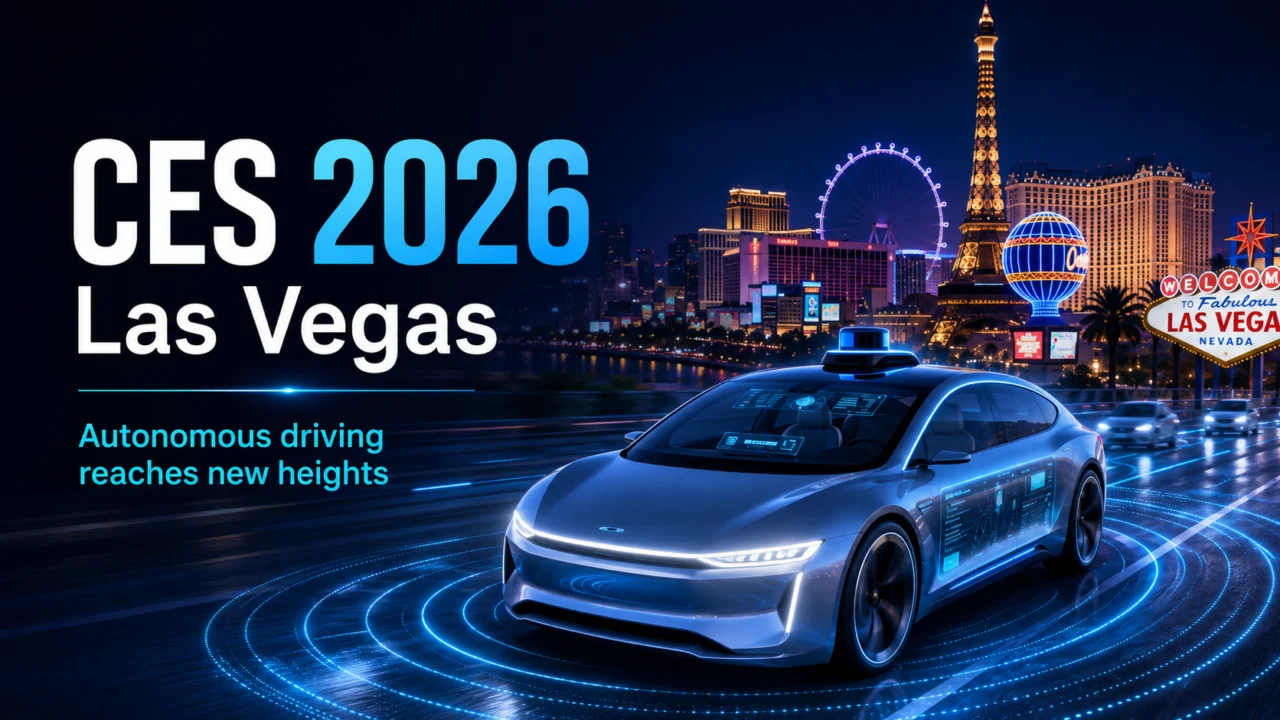
The 2026 Consumer Electronics Show in Las Vegas shattered expectations for autonomous vehicle technology. Nvidia’s Alpamayo platform demonstrated unprecedented reasoning capabilities, while Autoliv unveiled production-ready retractable steering systems. These breakthroughs signal a market poised for explosive growth: from $64.25 billion in 2024 to $173.20 billion by 2033. What does this mean for consumers and businesses navigating the autonomous revolution?
“We’re witnessing AI transition from reactive systems to cognitive decision-makers. Autonomous vehicles now possess reasoning frameworks that mirror human thought processes.” — Jérôme HENRY, Writer – Demystia.com
Nvidia Alpamayo: the brain behind next-generation self-driving
At CES 2026, Nvidia introduced a fundamental shift in autonomous vehicle intelligence. Alpamayo 1 doesn’t just process sensor data—it thinks through problems using chain-of-thought reasoning. When faced with ambiguous traffic scenarios, the system methodically evaluates options before acting. This marks a departure from traditional reactive AI models that dominated previous automotive AI implementations.
Technical architecture powering Alpamayo
The system leverages 10 billion parameters within a vision-language-action framework. Consider a construction zone with conflicting signage: Alpamayo breaks down the scenario into logical steps, weighing safety factors before determining the optimal path. Traditional systems would either freeze or make snap judgments without this intermediate reasoning layer.
Nvidia released the complete technology stack as open source via Hugging Face. Developers gain access to AlpaSim simulation tools and 1,700 hours of validated driving data spanning 25 countries. This democratization of advanced AI could accelerate innovation across the automotive sector, enabling smaller manufacturers to compete with established players.
Nvidia CEO Jensen Huang unveils Alpamayo’s cognitive capabilities at CES 2026
Mercedes-Benz CLA integrates Alpamayo first
The 2026 Mercedes CLA becomes the inaugural production vehicle featuring NVIDIA DRIVE AV. This Level 2+ system launches in Q1 2026 across U.S. markets. Mercedes employs a redundant architecture: Alpamayo handles primary navigation while Nvidia Halos provides failsafe monitoring. The three-year subscription costs $3,950, positioning it competitively against Tesla’s $12,000 Full Self-Driving package.
“Open-source AI frameworks like Alpamayo lower entry barriers for automotive innovation. Small teams can now prototype advanced autonomous features that previously required billion-dollar R&D budgets.” — Jérôme HENRY, Writer – Demystia.com
| System | SAE level | Cost structure | Market status |
|---|---|---|---|
| Nvidia Alpamayo (Mercedes CLA) | Level 2+ | $3,950 (3-year) | Q1 2026 launch |
| Tesla Full Self-Driving | Level 2 | $12,000 one-time | Currently available |
| BMW Personal Pilot L3 | Level 3 | Undisclosed pricing | Available since 2024 |
| Mercedes DRIVE PILOT | Level 3 | €2,500 option | Rolling out 2025 |
Retractable steering wheels redefine interior space
Autoliv and Tensor showcased a breakthrough at CES 2026: production-grade retractable steering wheels. When autonomous mode engages, the wheel retracts flush into the dashboard. Passengers reclaim space for work or relaxation, fundamentally altering vehicle interior design philosophies.
Dual-airbag safety architecture
The innovation relies on independent airbag systems. Manual driving utilizes the conventional steering wheel airbag. Upon entering autonomous mode, a dashboard-mounted airbag activates while the wheel retracts. This redundancy maintains crash protection standards regardless of driving mode.
The Tensor Robocar debuts this technology in 2026. Unlike fleet robotaxis, Tensor targets individual ownership in U.S., Middle Eastern, and European markets. The vehicle’s architecture was designed from inception for seamless transitions between manual and autonomous operation.
Market projections signal industry transformation
Financial analysts project autonomous vehicle adoption will accelerate dramatically. The sector expects a compound annual growth rate of 14.80% through 2033. Regional dynamics reveal interesting patterns across global markets.
Geographic adoption patterns
North America currently captures 19% of global autonomous vehicle revenue. However, Asia-Pacific demonstrates faster growth trajectories. China alone anticipates deploying 14.5 million autonomous vehicles by 2040. European regulators continue expanding Level 3 autonomy approvals, with Ford targeting hands-free highway driving in 2026.
Meanwhile, automotive AI spending surges independently. From $2.3 billion in 2024 to $16.2 billion by 2026, this 30% annual growth reflects escalating demand for ADAS and computer vision systems. Investment concentrates on sensor fusion, decision-making algorithms, and edge computing platforms.
Software-defined vehicles reshape ownership models
CES 2026 highlighted the shift toward SDV (Software Defined Vehicle) architectures. Manufacturers now deliver feature upgrades, performance enhancements, and safety patches over-the-air. Vehicle capabilities evolve post-purchase, similar to cloud-based enterprise systems that continuously improve.
5G connectivity enables vehicle-to-everything communication
Nearly all 2026 model-year vehicles incorporate 5G cellular connectivity. This enables real-time data exchange between vehicles, infrastructure, and cloud services. Traffic signals broadcast timing information, helping vehicles optimize speed to catch green lights. Emergency vehicles transmit location data, allowing autonomous systems to yield appropriately.
Cybersecurity becomes paramount
Increased connectivity introduces attack vectors. Manufacturers invest heavily in end-to-end encryption, intrusion detection, and secure boot processes. Some automakers partner with cybersecurity firms to conduct penetration testing and vulnerability assessments. The industry recognizes that a single high-profile hack could undermine consumer confidence across the entire sector.
Remaining barriers to widespread adoption
Despite technological progress, significant obstacles persist. Sensor costs remain prohibitive for mass-market vehicles. High-resolution LIDAR units can exceed €68,000 per vehicle. While prices decline annually, affordable alternatives must emerge before autonomous features reach economy segments.
Regulatory fragmentation and liability concerns
Legal frameworks vary dramatically across jurisdictions. Some U.S. states permit unsupervised testing, while others mandate safety drivers. European regulators approach certification cautiously, requiring extensive validation before approving higher autonomy levels. Insurance industries grapple with liability questions when AI systems cause accidents.
Public acceptance also varies regionally. Surveys indicate younger demographics embrace autonomous technology more readily than older generations. Trust builds gradually through exposure and positive experiences. Manufacturers must balance innovation with conservative deployment strategies to avoid undermining confidence through preventable incidents.
Strategic implications for businesses
Companies across industries should evaluate how autonomous vehicles impact operations. Logistics firms can reduce driver costs and extend operating hours. Retail businesses might redesign parking infrastructure as vehicles self-park remotely. Real estate developers could convert parking structures to alternative uses as autonomous ridesharing reduces vehicle ownership.
Fleet operators face immediate decisions about technology adoption timelines. Early movers gain competitive advantages through reduced labor costs and improved asset utilization. However, premature investment risks backing obsolete platforms. Businesses must balance innovation with prudent capital allocation.
The autonomous vehicle revolution accelerates regardless of individual preparedness. Organizations that proactively assess implications position themselves advantageously. Those delaying strategic planning may find themselves disadvantaged as competitors leverage these technologies to improve operational efficiency and customer experiences.
For deeper insights into automotive AI developments, explore our comprehensive guide on how artificial intelligence transforms transportation systems. Understanding these technological shifts helps businesses make informed decisions about autonomous vehicle integration into their operations.